Autore: Vittorio Maceratesi

INTRODUZIONE ALL’ELETTROCHIMICA

Con cella elettrochimica s’intende un dispositivo in grado di convertire energia chimica in energia elettrica o energia elettrica in energia chimica.

Nel primo caso si parla di celle galvaniche che sfruttano delle reazioni redox spontanee forzando gli elettroni ad attraversare un filo elettrico e ottenere così corrente elettrica.

Nel secondo caso si parla invece di celle elettrolitiche che convertono energia elettrica in energia chimica. Attraverso il passaggio di corrente elettrica si fanno avvenire reazioni redox che in condizioni normali non sarebbero spontanee.


THE IONIC BOND

An ionic bond is an electrostatic interaction between a positively charged ion (cation) and a negatively charged ion (anion).

This bond occurs when the difference in electronegativity between the species is greater than 1.9.

The less electronegative species donates one or more electrons to the more electronegative species. The species that donates the electrons becomes a cation, while the species that receives the electrons becomes an anion..

A common example of an ionic bond can be found in sodium chloride, the salt we use in our daily cooking.

The significant difference in electronegativity allows sodium (Na) to donate an electron to chlorine (Cl). This electron transfer is further favored by the electronic configurations of the two elements involved in the bond.

By donating one electron, the sodium atom becomes a Na⁺ ion and acquires the electronic configuration of neon, the noble gas that precedes it in the periodic table.

Na = 1s22s22p63s1 Na+ = 1s22s22p6

By gaining one electron, the chlorine atom becomes a Cl⁻ ion and acquires the electronic configuration of argon, the noble gas that follows it in the periodic table.

Cl = 1s22s22p63s23p5 Cl = 1s22s22p63s23p6

The full octet in the electronic configurations of noble gases gives these elements a high degree of stability.

These ions arrange themselves into specific structures called crystal lattices, in order to maximize the attractive forces between oppositely charged ions and minimize the repulsive forces between like-charged ions.

Another example of an ionic bond is found in calcium chloride, which is used in solutions such as antifreeze.

The significant difference in electronegativity allows calcium (Ca) to donate two electrons, one to each of two chlorine (Cl) atoms. This results in the formation of one Ca²⁺ ion for every two Cl⁻ ions formed.

This electron transfer is further favored by the electronic configurations of the two elements involved in the bond.

By donating two valence electrons, the calcium atom becomes a Ca²⁺ ion, acquiring the electronic configuration of the noble gas that precedes it..

Ca = 1s22s22p63s23p64s2 Ca2+= 1s22s22p63s23p6

By gaining one electron, each chlorine atom becomes a Cl⁻ ion, acquiring the electronic configuration of the noble gas that follows it (Ar).

Cl = 1s22s22p63s23p5 Cl = 1s22s22p63s23p6

The full octet in the electronic configurations of noble gases gives these elements a high degree of stability.

These ions arrange themselves into specific structures called crystal lattices, in order to maximize the attractive forces between oppositely charged ions and minimize the repulsive forces between like-charged ions.

  • An ionic bond involves the transfer of one or more electrons between different chemical species.
  • The less electronegative species donate one or more electrons to the more electronegative species.
  • An ionic bond is formed when the electronegativity difference is greater than 1.9.
  • The oppositely charged ions arrange themselves in crystal lattices.

DETONATION OR DEFLAGRATION

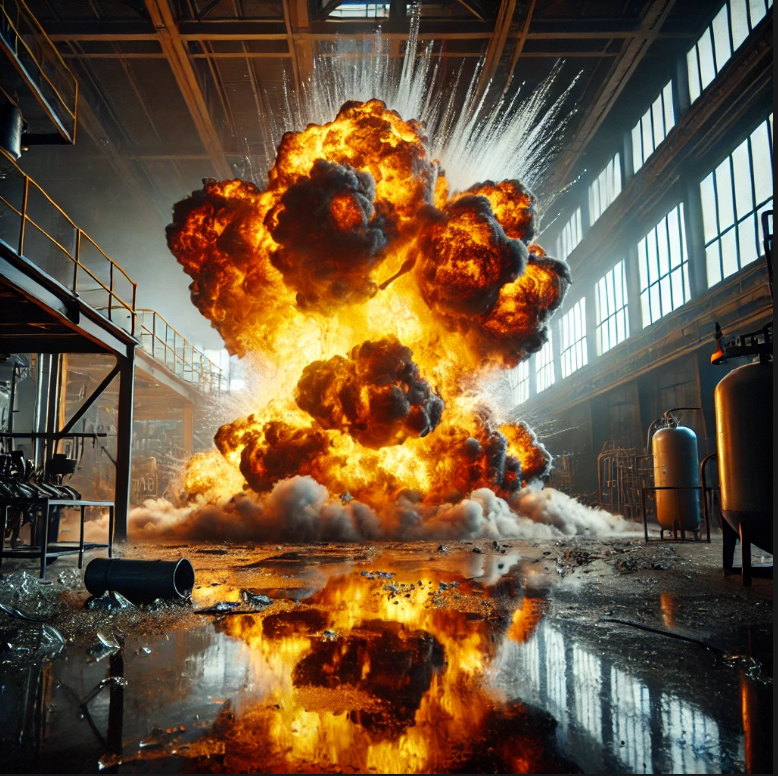
An explosion is a phenomenon capable of releasing a huge amount of energy in a very short time, primarily as heat and electromagnetic radiation.

Besides the release of a huge amount of energy, an explosion is accompanied by a rapid increase in pressure due to the release of high-pressure gases.

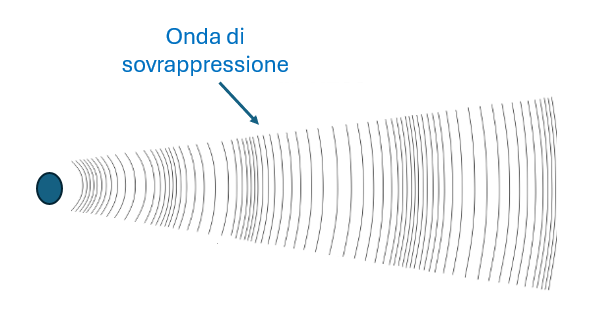
These gases push and compress the surrounding atmosphere, which in turn pushes and compresses air volumes further away. This results in the formation of a high-pressure wave that propagates at a certain speed from the point of the explosion.

If the speed of the high-pressure wave is below the speed of sound, the explosion is called a deflagration (subsonic wave).

If the speed of the high-pressure wave is greater than the speed of sound, the explosion is called a detonation (supersonic wave).

MONOATOMIC IONS

An ion is a chemical species with a net electrical charge. It can be composed of a single atom (monoatomic ion) or a group of atoms (polyatomic ion).

When the net charge is positive, the ion is called an ANION. In the presence of a net positive charge, the ion is called a CATION.

Example:

  • Na+; Cl; Ca2+; O2- (monoatomic ions).
  • NH4+, VO2+, CO32-, SO42-, PO43- (polyatomic ions).

Let’s focus on the following monoatomic cation:

The positive charge +1 indicates that the number of protons exceeds the number of electrons by one.

This is obtained by subtracting one electron from the neutral atom, NOT by adding one proton.

Li+   3 protons; 2 electrons.

From the current information, it’s not possible to determine the number of neutrons.

(If the calculation of subatomic particles is unclear, click here).   


A positive ion, obtained by the removal of one or more electrons, is called a CATION

Let’s focus on the anion F obtained by the following neutral element:

Fluorine is composed of 9 protons, 10 neutrons, 9 electrons. The addition of one electron, results in the anion F

F      9 protons; 10 neutrons 10 electrons                             

A negative ion, obtained by the addition of one or more electons, is called an anion.

A mistake that must be absolutely avoided, is adding or subtracting a proton instead of an electron. This mistake results in a change of the atomic number.

  • A monoatomic cation is a positive ion, composed of a single atom, obtained by the removal of one or more electrons from a neutral element.
  • A monoatomic anion is a negative ion, composed of a single atom, obtained by the addition of one or more electrons from a neutral element.

Calculate the number of protons, neutrons and electrons of the ion S2- from the following neutral atom:

The atomic structure of the neutral atom is composed of 16 protons, 16 neutrons e 16 electrons;

It’s necessary to add or subtract a number of electrons consistent with the charge of the ion;

Therefore, the structure of the ion is made up of di 16 protons, 16 neutrons e 18 electrons.

THE ATOMIC STRUCTURE

An atom is made up of subatomic particles called protons, neutrons and electrons.

  • Protons are positively charged particles;
  • Neutrons have no electrical charge;
  • Electrons are negatively charged particles.

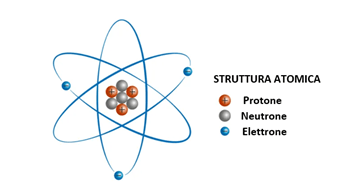
As shown in Figure 1 below, an atom consists of an inner nucleus with protons and neutrons with electrons located outside the nucleus.

Figure 1 – Representation of the atomic structure.

All the positive charge is concentrated in the center of the atom, while the negative charge is distributed externally. The role of the neutron is to increase the distance between the protons and prevent proton-proton repulsive interactions from destabilizing the entire structure.

The masses of subatomic particles are extremely small.

  • Proton mass: 1.673×10⁻²⁷ kg
  • Neutron mass: 1,675×10−27 kg
  • Electron mass: 9,109×10−31 kg

The mass of the electron is nearly 2,000 times smaller than that of the proton and neutron, which is why it can be considered negligible.

Even the charges of subatomic particles are significantly small.

  • Proton charge: + 1.602×10⁻¹⁹ C
  • Neutron charge: 0 C
  • Electron charge: – 1.602×10⁻¹⁹ C

The charge of a proton is equal to the charge of an electron, though with the opposite sign. The overall charge of the atom is neutral, meaning the positive charge of the nucleus is balanced by the negative charge of the electrons.

Since the charge of a proton is equal to the charge of an electron, it’s easy to deduce:

IN AN ATOM THE NUMBER OF PROTONS IS EQUAL TO THE NUMBER OF ELECTRONS.

Atoms can be identified by two types of numbers:

  • ATOMIC NUMBER (Z)  which represents the number of protons;
  • MASS NUMBER (A) which represents the sum of protons and neutrons.

The difference between the atomic number (Z) and the mass number (A) gives the number of neutrons.

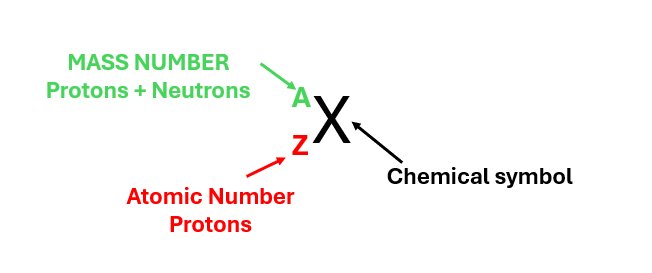
As shown in Figure 2, a chemical element is described by two numbers: the atomic number (Z), which is listed in the lower left, and the mass number (A), which is listed in the upper left.

Figure 2 – Representation of a chemical element.

KEY POINTS:

  • MASS NUMBER (protons + neutrons) is always listed in the upper left;
  • ATOMIC NUMBER (protons) is always listed in the lower left;
  • In an atom the number of protons is equal to the number of electrons;
  • The number of neutrons is obtained by subtracting the atomic number from the mass number.

SOLVED EXERCISE:

Find the number of protons, neutrons, and electrons in the following atom:

  • Atomic number, reported in the lower left, represents the number of protons. p+= 6
  • The number of electrons is equal to the number of protons. e= 6
  • (Mass number – Atomic Number)= Number of neutrons. n = 12-6 = 6

SOLUTION:

p+= 6;

n = 6;

e= 6

ACIDO MURIATICO

Con acido muriatico s’intende una soluzione acquosa di acido cloridrico (HCl) ad una concentrazione variabile che può andare dal 10-12% per utilizzi domestici ma che può arrivare anche al 30-37% per utilizzi professionali.

Noto per le sue proprietà corrosive, trova largo impiego come agente di rimozione di residui di calcare, ad esempio nel WC.

CaCO3 + 2HCl → CaCl2 + H2O + CO2(g)

Dalla reazione tra il calcare e l’acido cloridrico si forma cloruro di calcio che si scioglie facilmente in acqua e anidride carbonica che si allontana sotto forma di gas.

  • Essendo altamente corrosivo, è di fondamentale importanza proteggere le parti del corpo esposte, occhi e mucose.
  • Se si sceglie di diluirlo in casa, versare l’acido nell’acqua e MAI E POI MAI il contrario. Si produrrebbero schizzi di liquido corrosivo che potrebbero accidentalmente finire in contatto con parti sensibili del vostro corpo.
  • Non utilizzare nella pulizia nei marmi in quanto questi hanno composizione chimica analoga a quella del calcare e subirebbero un danno irreversibile.
  • Non utilizzare assieme alla candeggina. Il mescolamento di acido muriatico (HCl) e candeggina (NaClO) porterebbe a una reazione redox con la conseguente liberazione di Cloro gassoso nocivo alla salute.

ClO + Cl + 2H+ → Cl2(g) + H2O

ESERCIZIO 12 – REDOX IN FORMA MOLECOLARE

C4H6 + O2 → CO2 + H2O

Step 1 – Assegnare i numeri di ossidazione a tutti gli elementi presenti nella reazione:   

Da notare: Il Carbonio nel composto C4H16 ha numero di ossidazione negativo e frazionario. Infatti, per bilanciare la carica +6 dovuta ai 6 atomi di idrogeno, i 4 atomi di Carbonio, nel loro insieme, devono avere carica negativa. Questo è possibile solo se ciascun Carbonio a carica uguale a -6/4 ovvero -3/2

Step 2 – Individuare la specie che si ossida e che si riduce:

C si ossida passando da stato d’ossidazione -3/2 a +4 cedendo 11/2 elettroni;

O si riduce passando da stato d’ossidazione 0 a -2 acquistando 2 elettroni.

Step 3 – Scrivere le semi-reazioni di ossidazione e riduzione considerando solo gli elementi che acquistano e perdono elettroni.

4C3/2- → 4C4++ 22e (semi-reazione di ossidazione)

Si è utilizzato il coefficiente stechiometrico 4 in quanto nella specie C4H6 sono presenti 4 atomi di Carbonio.

2O0 + 4e → 2O2-  (semi-reazione di riduzione)

Si è utilizzato il coefficiente stechiometrico 2 in quanto nella specie O2 sono presenti 2 atomi di Ossigeno.

Step 4 – Applicare la regola del prodotto incrociato e sommare in seguito le due reazioni:

4C3/2- → 4C4++ 22e ) x2

2O0 + 4e → 2O2- ) x11

8C3/2- + 22O0+ 44e → 8C4+ + 22O2-+ 44e

Si procede ad elidere gli elettroni:

8C3/2- + 22O0 → 8C4+ + 22O2-

Step 5 – Ricomporre la reazione tenendo conto dei nuovi coefficienti stechiometrici:

2C4H6 + 11O2 → 8CO2 + H2O

Step 6 – Si controlla che anche le altre specie non partecipanti alla reazione redox siano bilanciate, e in caso di problemi con Idrogeno e Ossigeno, si possono aggiungere anche molecole di acqua.

2C4H6 + 11O2 → 8CO2 + 6H2O

ESERCIZIO 11 – REDOX IN FORMA MOLECOLARE

C7H16 + O2 → CO2 + H2O

Step 1 – Assegnare i numeri di ossidazione a tutti gli elementi presenti nella reazione:   

Da notare: Il Carbonio nel composto C7H16 ha numero di ossidazione negativo e frazionario. Infatti, per bilanciare la carica +16 dovuta ai 16 atomi di idrogeno, i 7 atomi di Carbonio, nel loro insieme, devono avere carica negativa. Questo è possibile solo se ciascun Carbonio a carica uguale a -16/7

Step 2 – Individuare la specie che si ossida e che si riduce:

C si ossida passando da stato d’ossidazione -16/7 a +4 cedendo 44/7 elettroni;

O si riduce passando da stato d’ossidazione 0 a -2 acquistando 2 elettroni.

Step 3 – Scrivere le semi-reazioni di ossidazione e riduzione considerando solo gli elementi che acquistano e perdono elettroni.

7C16/7- → 7C4++ 44e (semi-reazione di ossidazione)

Si è utilizzato il coefficiente stechiometrico 7 in quanto nella specie C7H16 sono presenti 7 atomi di Carbonio.

2O0 + 4e → 2O2-  (semi-reazione di riduzione)

Si è utilizzato il coefficiente stechiometrico 2 in quanto nella specie O2 sono presenti 2 atomi di Ossigeno.

Step 4 – Applicare la regola del prodotto incrociato e sommare in seguito le due reazioni:

7C16/7- → 7C4++ 44e ) x1

2O0 + 4e → 2O2- ) x11

7C16/7- + 22O0+ 44e → 7C4+ + 22O2-+ 44e

Si procede ad elidere gli elettroni:

7C16/7- + 22O0 → 7C4+ + 22O2-

Step 5 – Ricomporre la reazione tenendo conto dei nuovi coefficienti stechiometrici:

C7H16 + 11O2 → 7CO2 + H2O

Step 6 – Si controlla che anche le altre specie non partecipanti alla reazione redox siano bilanciate, e in caso di problemi con Idrogeno e Ossigeno, si possono aggiungere anche molecole di acqua.

C7H16 + 11O2 → 7CO2 + 8H2O

ESERCIZIO 10 – REDOX IN FORMA MOLECOLARE

Cu + HNO3 → Cu(NO3)2 + NO + H2O

Step 1 – Assegnare i numeri di ossidazione a tutti gli elementi presenti nella reazione:   

Step 2 – Individuare la specie che si ossida e che si riduce:

Cu si ossida passando da stato d’ossidazione 0 a +2 cedendo 2 elettroni;

N si riduce passando da stato d’ossidazione +5 a +2 acquistando 3 elettroni.

Da notare: nel bilancio di massa una parte dell’Azoto passa da stato d’ossidazione +5 a +2 ma una parte rimane in stato d’ossidazione +5. Questa informazione tornerà utile nel bilanciamento finale.

Step 3 – Scrivere le semi-reazioni di ossidazione e riduzione considerando solo gli elementi che acquistano e perdono elettroni.

Cu → Cu2++ 2e (semi-reazione di ossidazione)

N5+ + 3e → N2+  (semi-reazione di riduzione)

Step 4 – Applicare la regola del prodotto incrociato e sommare in seguito le due reazioni:

Cu → Cu2++ 2e ) x3

N5+ + 3e → N2+ ) x2

3Cu + 2N5++ 6e → 3Cu2+ + 2N2++ 6e

Si procede ad elidere gli elettroni:

3Cu + 2N5+ → 3Cu2+ + 2N2+

Step 5 – Ricomporre la reazione tenendo conto dei nuovi coefficienti stechiometrici:

3Cu + 2HNO3 → 3Cu(NO3)2 + 2NO + H2O

Step 6 – Si controlla che anche le altre specie non partecipanti alla reazione redox siano bilanciate, e in caso di problemi con Idrogeno e Ossigeno, si possono aggiungere anche molecole di acqua.

Per questa reazione, in HNO3 ci sono due atomi di Azoto che partecipano alla reazione redox, mentre altri sei rimangono con un numero di ossidazione invariato (+5). Pertanto, al fine di bilanciare correttamente l’Azoto, occorre portare il numero complessivo di HNO3 uguale a otto.

3Cu + 8HNO3 → 3Cu(NO3)2 + 2NO + 4H2O

ESERCIZIO 9 – REDOX IN FORMA MOLECOLARE

Ba3(PO4)2 + SiO2 + C → P + CO2 + BaSiO3

Step 1 – Assegnare i numeri di ossidazione a tutti gli elementi presenti nella reazione:


Step 2 – Individuare la specie che si ossida e che si riduce:

C si ossida passando da stato d’ossidazione 0 a +4 cedendo 4 elettroni;

P si riduce passando da stato d’ossidazione 5 a 0 acquistando 5 elettroni.

Step 3 – Scrivere le semi-reazioni di ossidazione e riduzione considerando solo gli elementi che acquistano e perdono elettroni.

C → C4++ 4e (semi-reazione di ossidazione)

2P5+ + 10e → 2P  (semi-reazione di riduzione)

Questa reazione è stata scritta con il 2 come coefficiente stechiometrico in quanto in Ba3(PO4)2 sono presenti due atomi di Fosforo.

Step 4 – Applicare la regola del prodotto incrociato e sommare in seguito le due reazioni:

C → C4++ 4e ) x5

2P5+ + 10e → 2P ) x2

5C + 4P5++ 20e → 5C4+ + 4P+ 20e

Si procede ad elidere gli elettroni:

5C + 4P5+ → 5C4++ 4P

Step 5 – Ricomporre la reazione tenendo conto dei nuovi coefficienti stechiometrici:

2Ba3(PO4)2 + SiO2 + 5C → 4P + 5CO2 + BaSiO3

Step 6 – Si controlla che anche le altre specie non partecipanti alla reazione redox siano bilanciate, e in caso di problemi con Idrogeno e Ossigeno, si possono aggiungere anche molecole di acqua.

2Ba3(PO4)2 + 6SiO2 + 5C → 4P + 5CO2 + 6BaSiO3